
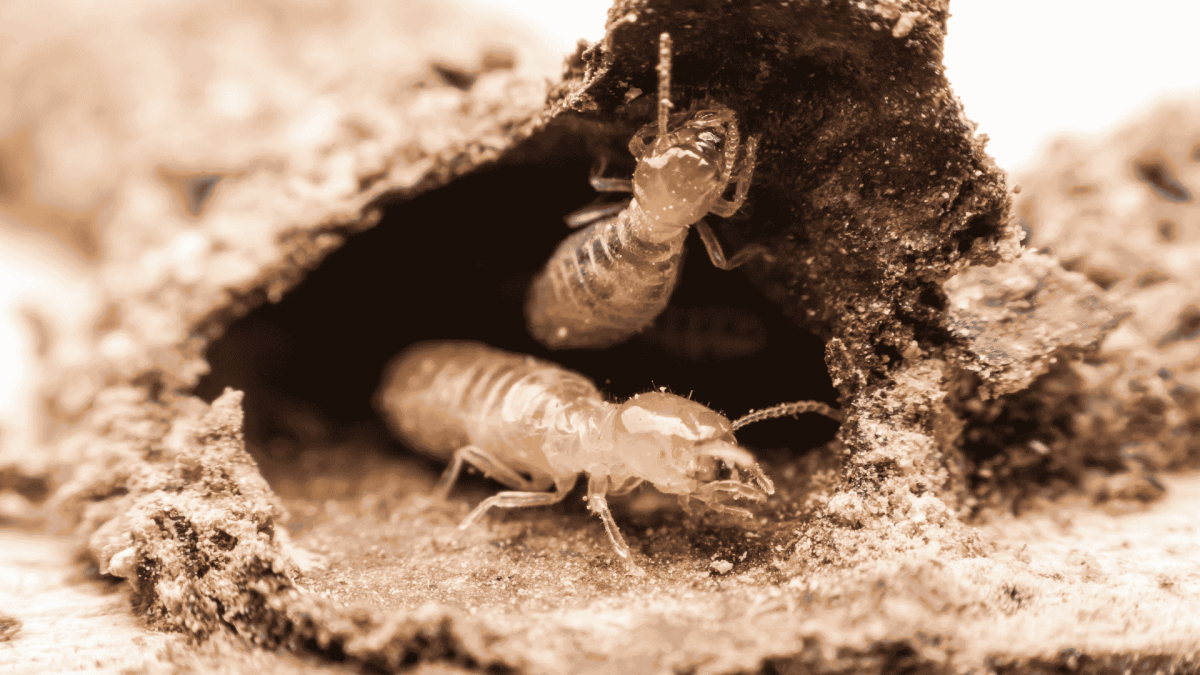
Why Homes West of Asheville Face Termite Pressure
The eastern subterranean termite is the most common wood-destroying insect in North Carolina, and it is the species our technicians encounter most often in the Enka-Candler area and along the West Asheville corridor. These termites live in large underground colonies and travel up into a structure in search of cellulose, which means the wood framing, subfloor, and trim of your home.
Common risk factors we see on local properties include:
- Crawl space foundations with limited ventilation or high humidity
- Grading and downspouts that direct rainwater toward the foundation
- Mature trees, old stumps, and firewood stacked against the house
- Wood siding, trim, or deck posts in direct contact with soil
- Mulch beds piled deep against foundation walls
- New construction where drainage and grading have not fully settled
None of these guarantee an infestation. Together, they explain why a home that has never had a problem can develop one after a wet spring or a change in landscaping.
Termite Swarm Season Timing in Western North Carolina
Swarming is the one moment termites make themselves obvious. When a colony matures, it produces winged reproductive termites called swarmers, which leave the nest in a group to mate and start new colonies. In our region this typically happens in spring, generally from March into May, often on a warm, still day shortly after rain. Higher elevations tend to run later than the lower valleys, so a neighbor at 2,000 feet may see swarmers a week or two before you do.
A swarm outdoors tells you termites are active in the area. A swarm inside your home, or a pile of small discarded wings on a windowsill or near a light fixture, tells you something more serious. Colonies generally need several years of growth before they produce swarmers, so indoor swarming activity usually points to an established colony that has already been feeding somewhere in or under the structure.
The swarmers themselves do not chew wood, and they die quickly indoors without soil contact. Vacuuming them up solves nothing. The workers behind the walls are the ones doing damage, and they keep feeding year round.
Termite Swarmer or Flying Ant?
Homeowners frequently mistake the two, so it is worth knowing the difference:
- Wings: Termite swarmers have four wings of roughly equal length that extend well past the body. Flying ants have a larger front pair and a smaller back pair.
- Waist: Termites have a broad, straight-sided body. Ants have an obvious pinched waist.
- Antennae: Termite antennae are straight and beaded. Ant antennae are bent at the elbow.
- Shed wings: Termites drop their wings shortly after swarming, which is why loose wings near a window are such a reliable clue.
If you are not sure what you are looking at, save a few specimens in a sealed bag or take a clear photo and call us. Identification is free and it takes us about a minute.
Mud Tubes: The Sign Most Homeowners Miss
Subterranean termites cannot tolerate open air for long. They dry out quickly, so they build protective shelter tubes out of soil, saliva, and waste to travel between the ground and the wood they are feeding on. These mud tubes are the single most useful sign a homeowner can learn to recognize, because they are visible without opening a wall.
A mud tube looks like a narrow, ragged line of dried mud running across concrete or wood. Most are about the width of a pencil, though established tubes can be wider. The color usually matches the surrounding soil, which is why they blend into a foundation wall and go unnoticed for years.
Here is how to check your own home for them:
- Start in the crawl space. Bring a bright flashlight and work slowly around the perimeter rather than scanning from the access door.
- Follow the foundation walls and piers. Look for mud lines climbing vertically from the soil toward the wood above.
- Inspect the sill plate, band joist, and floor joists. Termites often build tubes along the seam where wood meets masonry.
- Check the exterior. Look at the foundation, porch slabs, steps, and any place siding or trim comes close to grade.
- Test a suspicious tube gently. Break away a small section with a screwdriver. If it is repaired within a few days, the tube is active.
Wear a mask and long sleeves, and skip the crawl space entirely if access is tight or the space is wet. A free professional inspection is a better use of your afternoon, and our technicians know where activity hides in homes built on mountain grades.
The Moisture Connection
Termite control and moisture control are two halves of the same problem. Subterranean termites need consistent moisture to survive, and a damp crawl space gives them everything they need. Reduce the moisture and you make the structure meaningfully less attractive to a colony, while also protecting the wood from rot and slowing down other pests.
Signs your crawl space is holding too much moisture include:
- A musty or earthy odor that carries into the living space
- Standing water, saturated soil, or visible mud after rain
- Condensation on ductwork, pipes, or the underside of the subfloor
- A torn, thin, or missing vapor barrier
- Soft or springy floors above the crawl space
- Rust on metal fasteners and dark staining on joists
Our moisture control services address crawl space humidity directly through vapor barriers, drainage corrections, and dehumidification. When we perform a termite inspection, we assess moisture conditions at the same time and tell you honestly whether the crawl space is contributing to your risk. If it is not, we will say so.
What Our Termite Service Includes
Every property is different, so we build the plan around what we actually find rather than selling a one-size package. Our process follows five steps:
- Free inspection. We evaluate the crawl space or slab, foundation, exterior, and any interior areas of concern, and we use moisture readings to identify high-risk zones.
- Clear findings. You get a straightforward explanation of what we found, where we found it, and what it means for the structure.
- A customized treatment plan. Depending on the situation, this may include targeted treatment of active areas, a preventive barrier, or monitoring.
- Professional treatment. Our licensed technicians perform the work with products approved for use around families and pets.
- Ongoing protection. Regular inspections, monitoring, and annual renewal options keep the home covered after the initial treatment, backed by our service guarantees.
Other Warning Signs Worth Knowing
Beyond swarmers and mud tubes, watch for:
- Wood that sounds hollow when tapped
- Paint that bubbles, blisters, or peels for no clear reason
- Maze-like galleries in exposed wood or the back of trim
- Frass, the gritty pellet-like waste some wood-destroying insects leave behind
- Doors and windows that suddenly stick or bind
- Sagging floors, soft spots, or buckling laminate
Any one of these justifies an inspection. Several together justify a phone call today.
Inspections for Buying, Selling, or Refinancing
If you are closing on a home, a lender or buyer may require a Wood-Destroying Insect Report. Our licensed inspectors provide thorough, accurate, and timely WDIR inspections for termites, carpenter ants, and other wood-destroying pests. Real estate professionals who need dependable turnaround can learn more on our realtor services page.
Why Homeowners Choose Summit Pest Solutions
- Local, family-owned, and operated
- More than 20 years of termite experience in the mountains of Western North Carolina
- Free inspections and estimates
- Treatments that are safe for children and pets
- Flexible protection plans and comprehensive service guarantees
- Technicians who explain the work instead of talking around it
You can read what neighbors have said about working with us on our reviews page.
Frequently Asked Questions
How much does a termite inspection cost?
Nothing. Termite inspections and estimates are free, and there is no obligation to schedule treatment afterward.
When should I be watching for termite swarms?
Spring is the window to watch, generally March through May in our area, most often on warm days after rain. Because colonies feed year round, activity can be discovered in any season.
Are termite treatments safe around children and pets?
Yes. We use modern, professionally applied products and follow label directions precisely. Your technician will explain any short-term precautions before work begins so you know exactly what to expect.
I have never seen a termite. Do I still need protection?
Termites work out of sight, so absence of evidence is not evidence of absence. Most homeowners who discover damage never saw a single insect. An annual inspection is the practical way to catch a problem while it is still small.
Can I treat termites myself?
Retail products may kill the termites you can see, but they do not reach the colony in the soil, which is where the real problem lives. Subterranean termite control requires proper application around the structure and follow-up monitoring.
Does homeowners insurance cover termite damage?
Most policies exclude damage from termites and other wood-destroying insects because it is considered preventable maintenance. Check your specific policy, and treat prevention as the cheaper path.
Protect Your Home Before the Damage Starts
Termite damage does not repair itself, and it does not stay small. The homeowners who come out ahead are the ones who schedule an inspection before a swarm on the windowsill forces the issue. If you have seen mud tubes on your foundation, discarded wings near a window, or a crawl space that never quite dries out, let us take a look while the fix is still simple.
Our team also handles residential pest control throughout Buncombe County, so we can address termites and everyday pest pressure in one coordinated plan.
Call (828) 707-0282 or contact us online to schedule your free termite inspection.